
— The Home / Journal
The style.
A close-read of the architecture, materials, and craftsmanship that define the listing — the parts you only see on a slow walk-through.
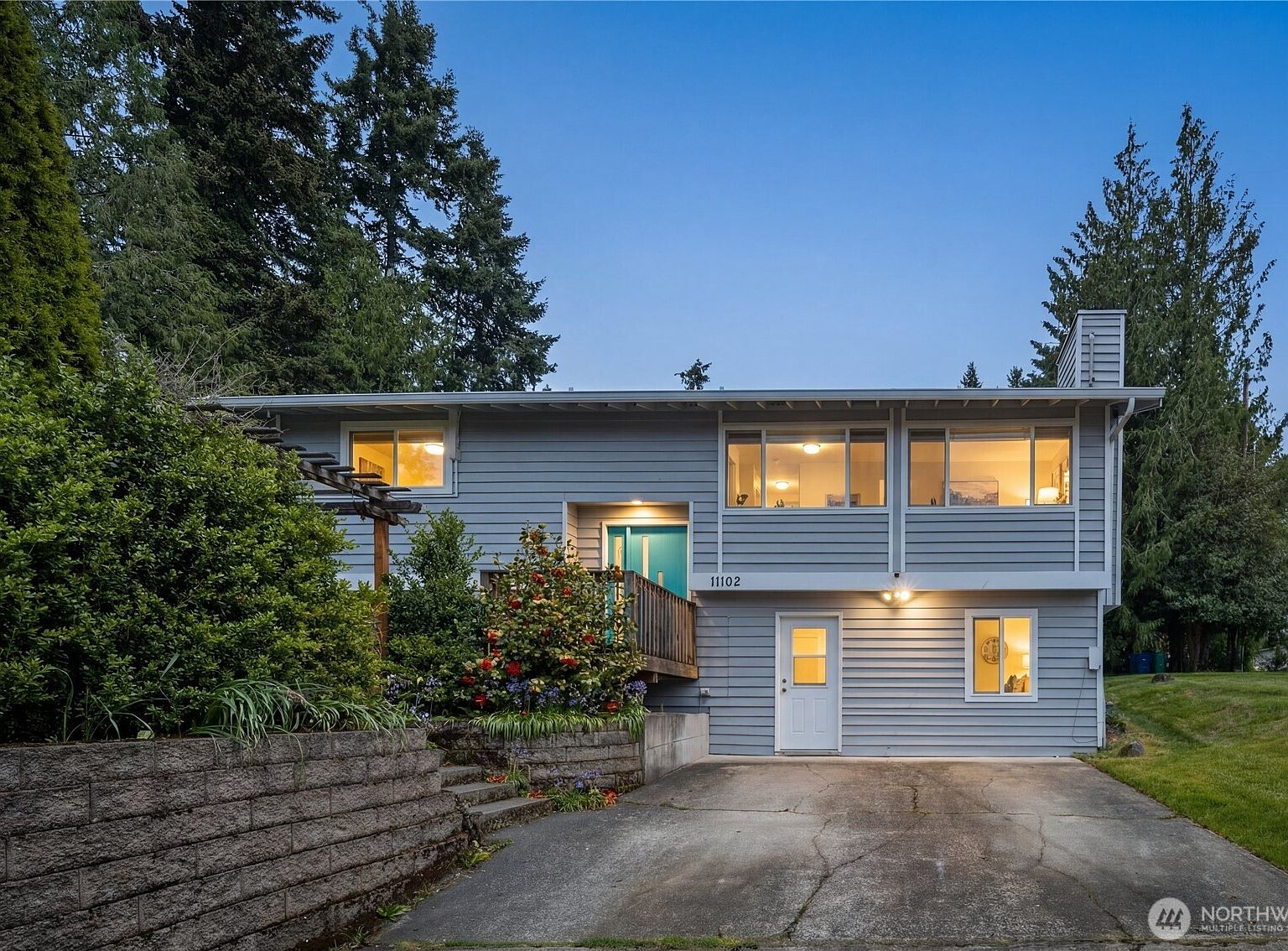
This is a modernized split-level — a Pacific Northwest housing form that dates to the 1960s and '70s, reworked with 2020s finishes. The bones are familiar; the surfaces are not.
The bones.
The split-level form is unmistakable: two living levels offset by half a story, a front door that lands at the midpoint. The original structure used wood framing with horizontal lap siding — typical for Kirkland builds of this era. The renovation preserved the massing and the proportions while updating nearly every surface.
The exterior wears light gray horizontal lap siding with white trim — a clean, contemporary Pacific Northwest palette. The entry door is bright teal, the one deliberate pop of color that tells you this isn't a flip. The windows are all double-pane replacements — expansive, letting in the kind of light that older split-levels rarely achieve.
The roofline is conventional, the chimney is present (now serving a stone-surround fireplace), and the overall massing reads modest and residential — the house fits the street, not the other way around.
The renovation.
"Fully renovated throughout" means what it says. Every room has been touched — new flooring, new paint, new fixtures, new surfaces. The renovation scope includes:
Flooring: High-end hardwood throughout the entire home. The living areas use a dark polished finish; the bedrooms and kitchen use a lighter gray tone. The transitions are clean and consistent — no carpet, no laminate, no vinyl.
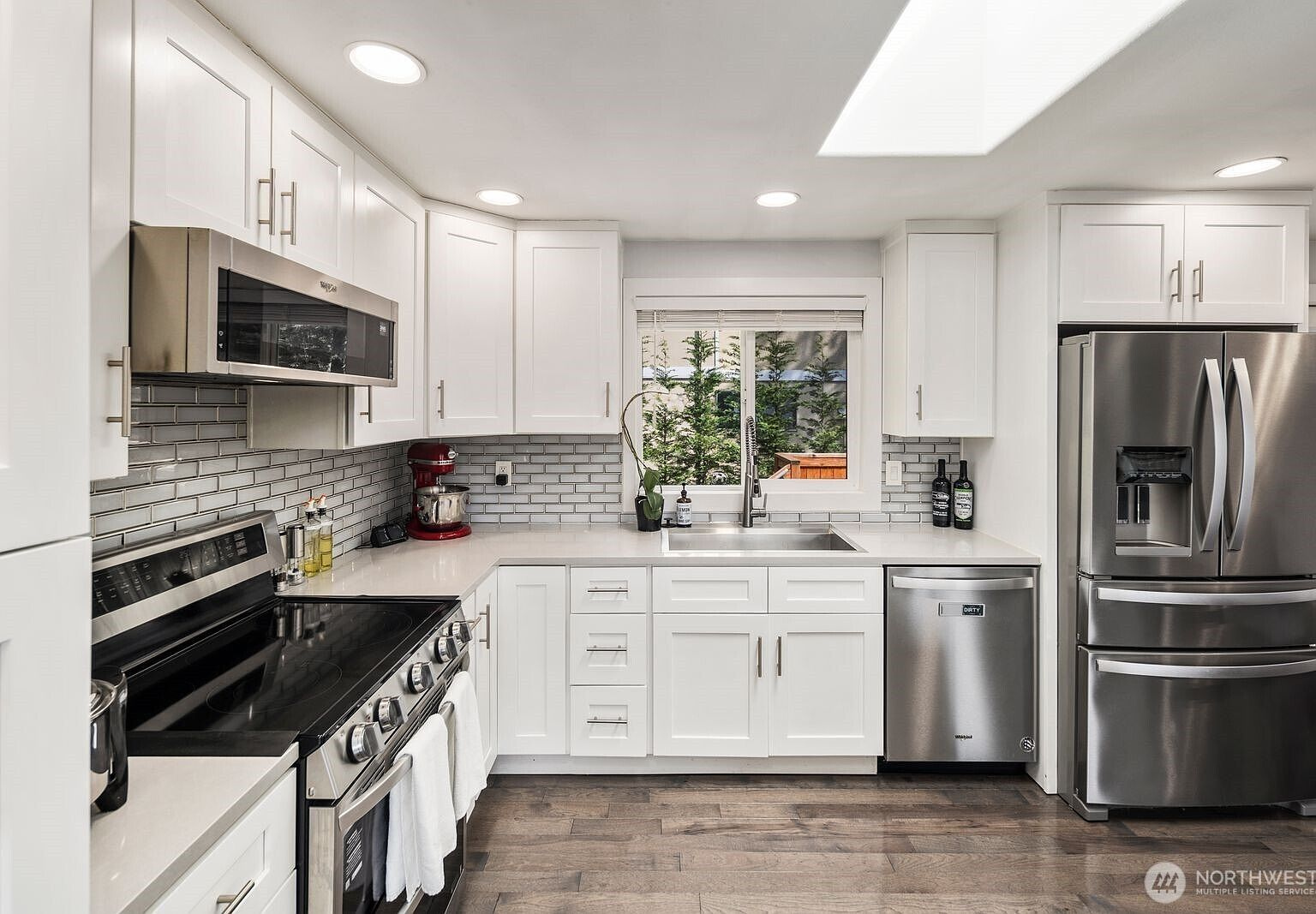
Kitchen: Complete gut renovation. White shaker cabinetry, gray brick-tile backsplash, quartz countertops, brand-new stainless appliances. A large skylight floods the space with natural light. The kitchen opens to the dining area in a modern open-concept flow.
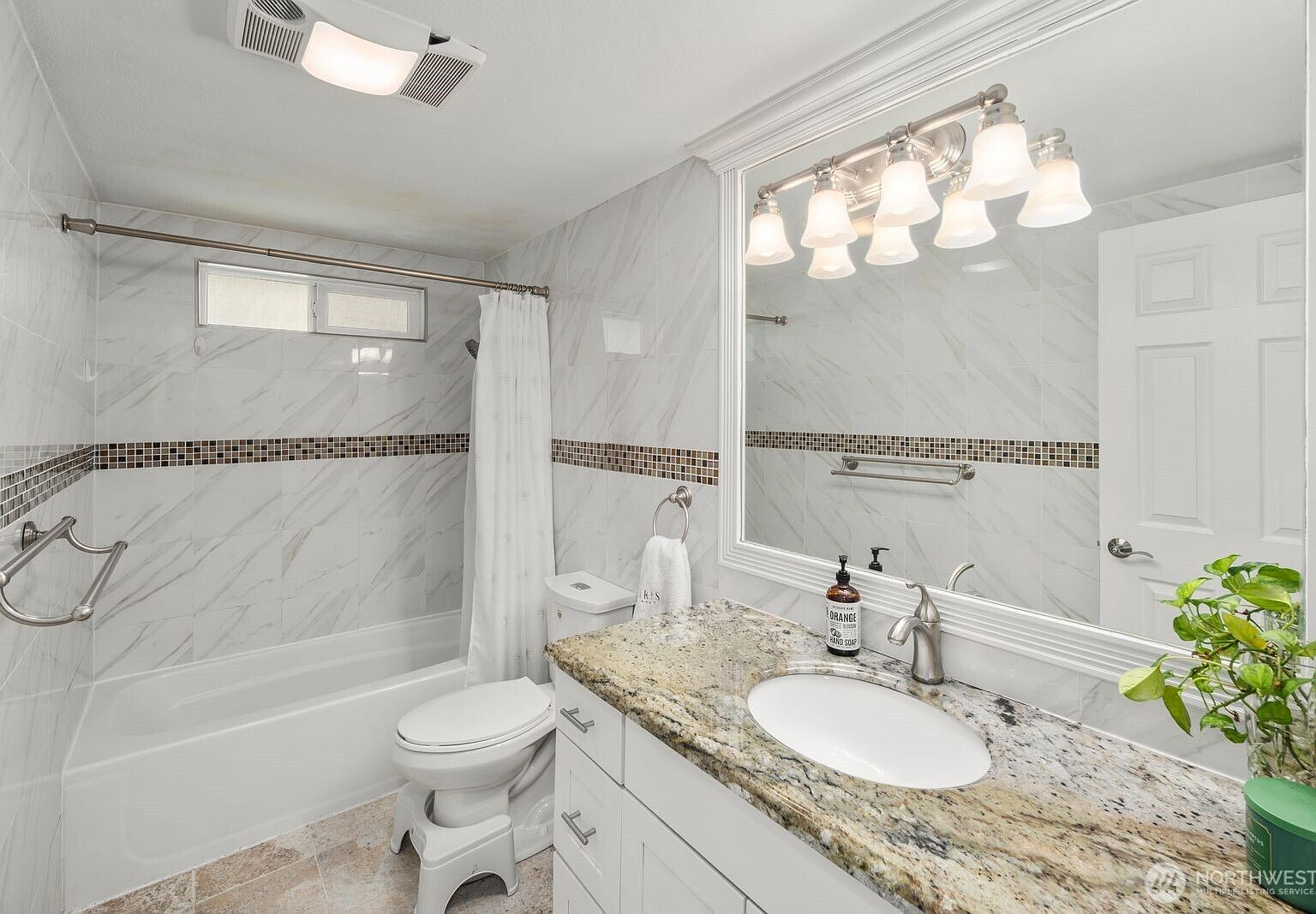
Bathrooms: Both updated with white marble-pattern wall tiles, brown mosaic accent strips, granite vanity countertops, and brushed nickel fixtures. The full bathtub/shower combo and a separate glass-wander shower give two distinct bathroom experiences.
HVAC: An energy-efficient mini-split system provides both heating and cooling in every room — a significant upgrade from the original baseboard or forced-air systems common in split-levels of this vintage.
The materials.
The renovation makes a specific material argument: white, gray, and natural wood, held to a consistent palette across every room. White shaker cabinets match the white walls. Gray tile backsplashes echo the gray-toned hardwood. Natural wood elements — the fireplace mantle, the deck railings, the backyard pergola — provide warmth without breaking the scheme.
Quartz was chosen over granite for the kitchen countertops — a deliberate choice that prioritizes low maintenance and a clean, non-mottled surface. The gray brick-tile backsplash adds texture without adding color.
In the bathrooms, marble-pattern wall tile reads luxury without the maintenance burden of actual marble. The granite vanity tops are durable and visually substantial — a half-step above what most renovations at this price point deliver.
The craftsmanship.
The quiet details are what separate this renovation from a surface-level flip. The fireplace surround uses real stone tile — not a peel-and-stick veneer. The kitchen's recessed can lighting is evenly spaced and dimmer-controlled. The hardwood transitions between rooms are flush, no trip strips. The skylight is properly flashed and insulated.
Outside, the wooden pergola entry is built from dimensional lumber, not prefab kit stock. The stone retaining walls use stacked ledger stone. The back deck features glass-paneled double doors that open to an elevated outdoor living space — the kind of indoor-outdoor connection that the original split-level never had.
The lot and what it enables.
At 9,400+ square feet, the lot is large for Rose Hill. The backyard is fully fenced with mature evergreen and deciduous trees providing privacy. A concrete staircase leads to the garden level with stone walls and tiered planting beds. The lawn is level and generous.
This is the kind of lot that makes an ADU/DADU genuinely feasible — the space, the setback, and the utility connections are all there. Even without an addition, the yard accommodates entertaining, gardening, a play structure, and storage without feeling crowded.
The corners nobody else noticed.
The recessed lighting throughout — consistent color temperature, evenly spaced, on dimmers. The mini-split heads mounted discreetly in each room rather than a single bulky unit. The way the kitchen skylight turns a north-facing room into one of the brightest spaces in the house. The French doors that connect the deck to the interior at exactly the right height. The closet doors in the primary bedroom — clean, white, sliding, and spacious. Small decisions that compound into a home that feels finished.
— Visit
See the joinery in person.
Photos only go so far. Schedule a private walk-through and we'll point out the details that don't show up online.
Schedule a walk-through